


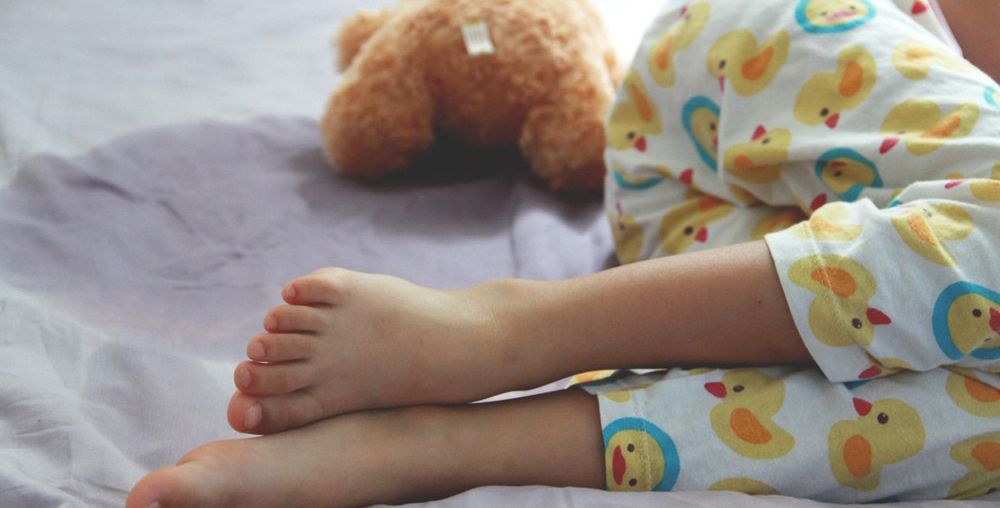
What is nighttime bedwetting?
This problem, which is called bedwetting at night, incontinence or enuresis, is explained as involuntary urinary incontinence during sleep in a child over 5 years old. Incontinence can be seen at night, as well as during the daytime sleep. The definition of primary enuresis is used in cases of staying dry for less than 6 months at night, and secondary enuresis is used in cases of staying dry for more than 6 months. In the diagnosis of the disease, it has been going on for at least 3 consecutive months and at least one wet night per month is an important finding.
How is it diagnosed?
Although it may be different for each child, in order to determine the underlying cause of bedwetting;
- Physics assessment
- Discussing family history, daily fluid intake, bladder-bowel habits, other accompanying disorders (diabetes, neurogenic disorders, etc.) and complaints
- Urine test
- Radiological imaging tests for bladder and kidneys
- And other assessment methods are used.
How common is it?
Bedwetting is a very common problem among children. It affects approximately 5-10% of children under the age of 10, while it affects 1.3% of children in the older age group. It is more common in boys (22%) than girls (15%).
Which children are in the risk group?
In terms of gender distribution, it is more common in boys than girls. It is not seen as tied to any culture or race. The main risk groups are as follows;
- Stress and anxiety: Bedwetting complaints may occur due to some emotional states. However, it is not expected that this situation will continue in the long term or that accompanying daytime findings will be very frequent. Contrary to popular belief, this is a group that we rarely see in the clinic.
- Family history (genetic predisposition).
- Attention deficit/hyperactivity disorder (ADHD): Bedwetting is more common in children with ADHD.
What are the symptoms of bedwetting at night?
As it can be understood from its name, the most obvious symptom is when the child involuntarily wets his underwear, clothes or the place he is in during sleep, whether it is daytime or nighttime sleep. In these children, lower urinary system disorders may be seen accompanied by daytime symptoms as well as nighttime findings.
Daytime findings accompanying nocturnal findings:
- Daytime urinary incontinence
- Feeling urgency about going to the toilet
- Using various maneuvers such as crossing the legs, pressing the genital area with hands, dancing to delay urination
- Intermittent urination
- Difficulty initiating voiding (resistive voiding)
- Strain-style voiding by contracting the abdominal muscles to initiate voiding
- Post urination drip
- Feeling of not fully emptying the bladder after voiding
- Weak current urination
- Pain in the genital area during or after urination (pelvic pain)
What are the causes of bedwetting at night?
- Presence of arousal disorder: The main cause of enuresis is not known exactly, but various factors are thought to play a role. Children with enuresis have an arousal disorder. Children who wet the bed at night have a very high arousal threshold during sleep, so they either delay or cannot respond to any external stimulus. This situation goes from the bladder to the brain, "I have a pee, go to the toilet!" "Work to hold the pee!" causes the order not to be transmitted. Thus, bedwetting occurs as urine output from the open urinary tract during sleep.
- Small bladder: Your child's bladder may not be developed enough to hold the urine produced during the night.
- Excessive amount of urine produced at night: Due to hormone imbalance, some children do not produce enough anti-diuretic hormone (ADH) to slow down their nighttime urine production.
- Urinary tract infection: Presence of infection can make it difficult to control urine in children. In the presence of urinary tract infection, besides bedwetting, there may be daytime accidents, frequent urination, red or pink urine, and pain when urinating.
- Sleep apnea: Sometimes bedwetting, often due to inflamed or enlarged tonsils or adenoids, obstructive sleep apnea, a condition in which a child's breathing is interrupted during sleep, can cause nocturnal incontinence. Conditions such as snoring and daytime drowsiness can also be observed in these children.
- Diabetes: Presence of diabetes can be among the causes of sleep deprivation at night. Nocturnal urinary incontinence may be the first sign of diabetes, especially in children who have not had urinary incontinence in the past and have suddenly started to leak.
- Chronic constipation: The muscles that control stool control are also involved in the control of urinary retention. In the long run, constipation can be seen as the cause of bedwetting at night, by making these muscles dysfunctional.
- Presence of structural problem: Presence of a structural problem in the urinary tract or nervous system can be a cause of bedwetting. This condition is related to a problem in the child's neurological system or urinary system.
How is it treated?
Before starting treatment, the cause of bedwetting at night should be well understood. After the underlying cause is found, the most appropriate treatment should be started for the child without delay. If bedwetting is accompanied by other health problems such as constipation, clenching, sleep apnea, it should be added to the treatment.
- Night alarm: It is a system consisting of a sensor that detects wetness and a device that makes a sound. It wakes the child by attaching to his underwear, by detecting the wetness, and helps the rest of the urine to be emptied into the toilet. With its regular use, the pelvic floor muscles, which allow urine to be retained over time, start to work reflexively, so the amount of urine discharged into the toilet begins to increase day by day. After a while, dry nights begin with no alarms going off. Studies have shown that it has a longer-lasting effect than drug therapy. There are no known side effects. In cases where it is used alone without pelvic floor rehabilitation, recurrence of complaints may occur.
- Medication: Desmopressin can be used to reduce the amount of urine produced at night. But consuming too much fluid with medication can often cause problems. desmopressin should be avoided if your child has symptoms such as fever, diarrhea or nausea. If the child has a small bladder, it is aimed to reduce bladder contractions by starting anticholinergic drugs such as oxybutynin. However, it should be known that drug treatments alone do not provide long-term success. Treatments combined with pelvic floor rehabilitation are more likely to be successful.
- Changing living habits: Symptoms can be reduced by simple changes in nutrition and toilet habits. Some suggestions for changes that can be made are as follows:
- Regular use of the night alarm
- The age-appropriate daily water consumption should be monitored and should be encouraged about water consumption.
- Avoiding liquids and foods that may disturb the bladder
- Creating and tracking urination hours
- Nighttime lighting between bedroom and toilet
- Prevention of constipation
- Encouraging going to the toilet before going to sleep
- Pelvic floor muscle rehabilitation: It includes training of muscle groups that control urinary retention and rehabilitation approach that supports healthy functioning. The treatment includes a detailed treatment session with various manual therapy, breathing exercises, posture and toilet posture training, nutrition and exercise recommendations. Biofeedback and neuromodulation applications are used as auxiliary equipment for treatment.
What problems can it cause if left untreated?
Bedwetting at night is a health condition that should not be expected to pass over time and should be considered by families. If left untreated, it can cause more serious problems affecting the lower urinary system. Identifying the conditions that cause complaints and starting treatment plays an important role in preventing more complex health problems that may be seen in the future.
In children who are not treated or whose treatment is delayed;
- Loss of self-confidence
- Anger and despair
- Shame and guilt
- Sense of failure
- Don't feel inferior to your peers
- Self-contempt and feeling worthless
- Isolation and isolation from society
- Unwillingness to communicate and socialize
- Psychological problems such as feeling embarrassed and inadequate can be seen.
It should be noted that bedwetting at night is very rare due to psychological reasons. In other words, psychological causes should not be seen as a cause of urinary incontinence, but as a result and should be considered important.
How does Tuğtepe Pediatric Urology team treat?
As a team, we are aware of how important multidisciplinary work is. We know that enuresis is not only a urological problem, but also a problem in the muscle groups that control urine. For this reason, we strongly believe in the effectiveness of pelvic floor muscle rehabilitation that combines various modalities in our treatment approach. Our doctor and pelvic floor physiotherapists make a consultation after each patient, determine the treatment approach map specific to the child and discuss it within themselves at certain session intervals. The frequency and number of sessions to be held are decided after the evaluation of our team. In this process, it is very important for children to be motivated for treatment and to do home exercises regularly.
It should not be forgotten that the treatment of enuresis is a team effort. The most important heroes of the team are the children.